




Camping Toilet: With or without chemicals?
Chemical toilet, dry toilet, SOG® system
Almost every camper is faced at some point with the decision of whether to buy a camping toilet with or without chemicals. Each variant has its advantages, but also disadvantages. Here you can find out more about the different variants.
Table of contents
Chemical toilet – high comfort, higher expenditure
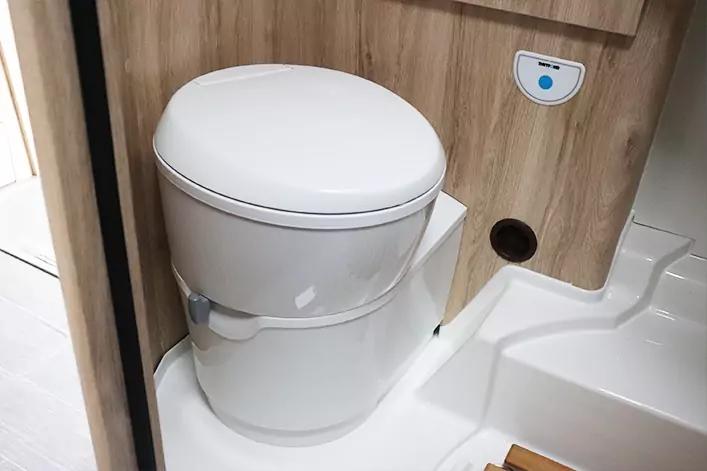
A chemical camping toilet works with chemical sanitary fluids. They have the task of decomposing your waste and reducing odours. After all, no one wants the camper van to smell slightly unpleasant after a few sessions of you and your fellow campers.
Chemical camping toilets work almost the same way as at home. There is a connection for fresh water and an opening that drains the waste water. Depending on the model, a fresh water tank for flushing and a waste-water tank for collecting the toilet contents are integrated into the toilet.
With the help of a hand pump, pressure is generated after the session, through which the fresh water flushes away the toilet contents quickly and with as little fresh water as possible.
Find out where and how to empty your chemical toilet here.
Faecal matter is decomposed very efficiently
Fresh water is needed for rinsing
Odours are broken down very well
Chemistry is used
No electricity is needed for toilets with a hand pump
The purchase is usually more expensive
Operation is very simple
The waste-water tank may only be emptied in suitable places
Organic sanitary additives as an environmentally friendly alternative
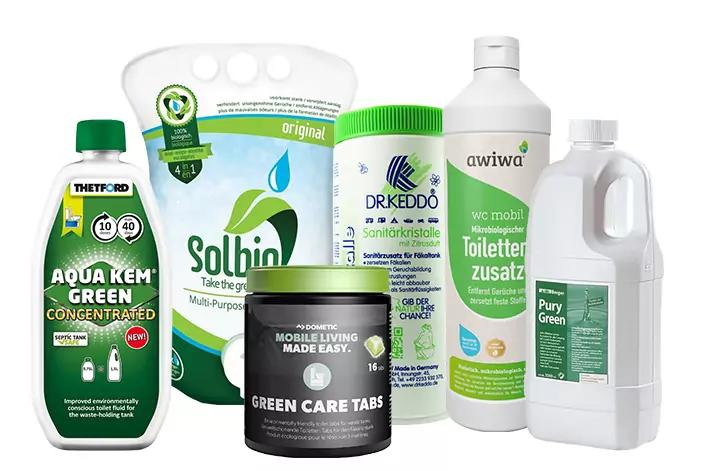
One of the biggest disadvantages of the chemical toilet is precisely the use of chemicals. These substances can have a negative impact on water bodies and contaminate groundwater even if disposed of properly. If you want to use and empty your camping toilet with a clear conscience, organic sanitary additives are a good choice. They work naturally with bacteria and other organisms that decompose faeces such as toilet paper and eliminate odours as efficiently as possible.
In relevant tests, organic sanitation additives have performed very well and are in no way inferior to chemical agents in terms of their performance. Even though organic supplements are usually priced somewhat higher than conventional substances, the decision should be clear.
Here you can find sanitary accessories in our Berger online shop.
Dry toilet – alternative without water
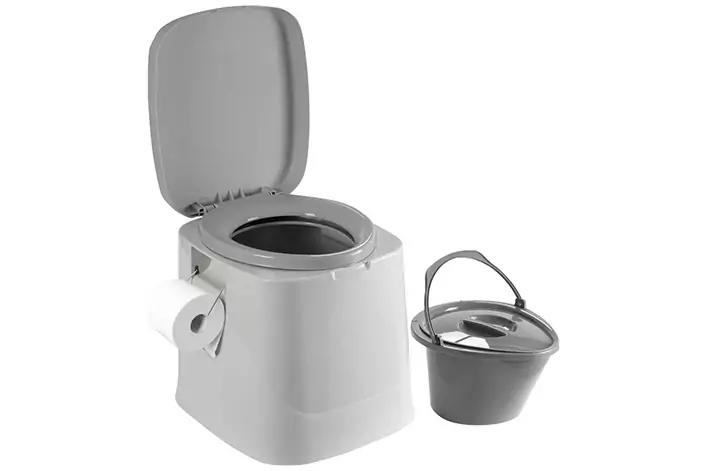
Camping toilets without chemicals are often realised as so-called „dry toilets“. They do not require rinsing water or chemical additives. If dry toilets are permanently installed in the motorhome, there is often a collection container instead of a tank, in which wood chips or peat can be found. Faecal matter and odours are bound there. Basically, you can imagine how such a toilet works in a similar way to a cat litter tray.
Dry toilets without litter bins work like the good old outhouse. There is a mobile toilet seat for this purpose, faeces are collected in a bucket under the seat. The bucket must be emptied afterwards. In the meantime, there are visually appealing models that offer sufficient comfort for one or two „sessions“.
Here you can find dry toilets in our Berger online shop.
You do not need extra water
Odour binding is not very effective
You do not need any chemical additives
The composting of the toilet residues takes several years
Sawdust or peat in the collection container can be composted
You must empty the bucket of faeces
Very inexpensive to purchase
The SOG® system – cassette toilets well ventilated
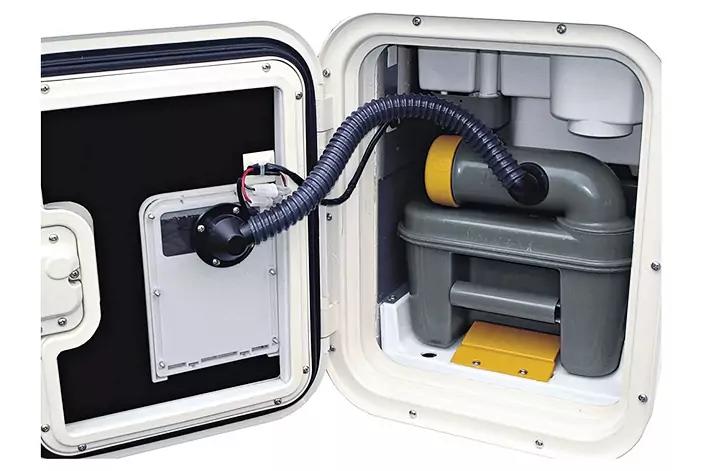
The SOG® system is actually the egg-laying wool-milk sow for all owners of a permanently installed cassette toilet. If you want to save on chemicals, we can recommend the SOG®.
The system works via exhaust air. When you open the slide of your toilet, you switch on the exhaust air at the bottom of the cassette. This transports the bad air from your cassette toilet to the outside. You can decide whether via a roof vent, a floor vent or through the service flap. This system ensures that the tank contents are well ventilated and decomposition starts even faster than with chemical use.
When exhausting air through the service flap, make sure that it is not under the awning or in the awning. Then prefer the floor vent or roof vent.
Here you can find the SOG® toilet ventilation in our Berger online shop.
No odour development
Filter change once a year
Faster decomposition
Acquisition costs
No chemicals necessary
The contents of the holding tank can be disposed of via the toilet
Commercially available toilet paper is okay
Conclusion: each variant has its advantages
The chemical camping toilet offers high comfort of use, but needs a relatively large amount of fresh water and works with chemicals. It is important that you only empty the waste-water tank with chemicals at the appropriate places.
However, if you use organic sanitary additives, you can benefit from the comfort of the chemical toilet with a clear conscience, because the substances used are biodegradable.
Dry toilets and cassette toilets with SOG® (without chemical insert) can be emptied more easily and are therefore somewhat more practical. Since they also do not contain any chemical additives, they are always the more environmentally friendly option.