





How a Camper Van Can Work for the Whole Family
How to make the most of the space in the camper van for a family holiday
A camper van is also a suitable vehicle for family holidays. Here you can find out which features a family-friendly camper van should have, and how to create additional living space on the campsite.
Table of contents
Consider the number of beds
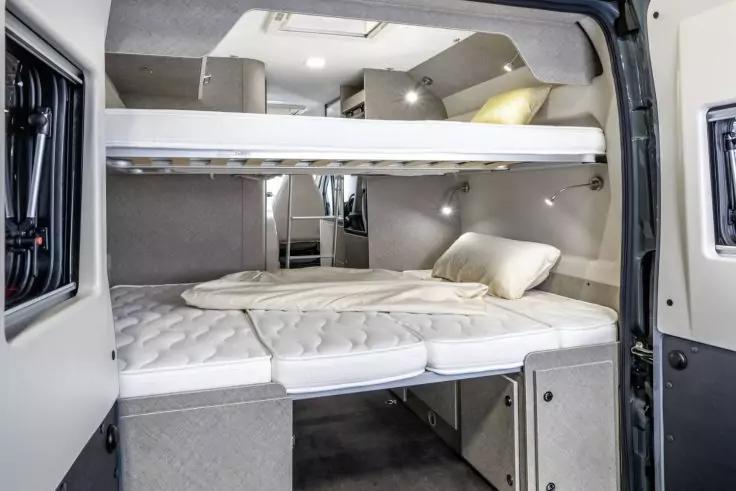
For family holidays, the van must offer enough sleeping places. Bunk beds create multiple sleeping spots in a compact space. In camper vans, they are always located in the rear, allowing the full vehicle width to be used.
However, the largest storage space in panel vans is also located at the rear. If you choose a camper with bunk beds, you will usually have to compromise on storage space, as the lower slatted base sits lower than in conventional rear beds.
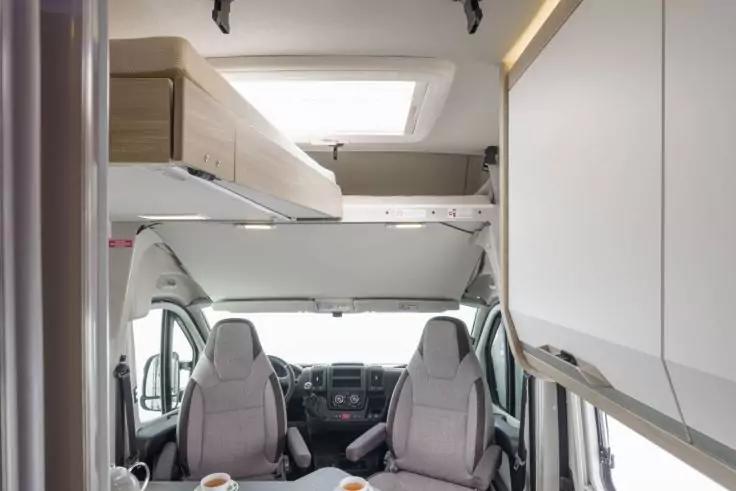
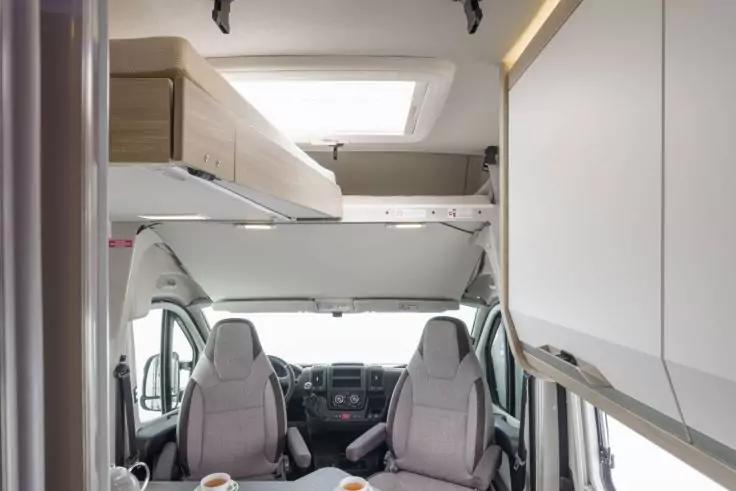
An additional double bed can also be created with a sleeping roof. There are two options: fixed high roofs made of GRP and pop-up roofs. Sleeping in an insulated GRP roof is much more comfortable in winter. However, the vehicle becomes significantly taller, which can affect driving comfort in strong winds. If you also mount an air conditioner or satellite system on the roof, some underpasses may become tight.
You can find general information about camper vans with pop-up roofs here.
Combined with a small emergency bed between the driver’s seats or a converted dinette, up to six sleeping places are possible in a panel van.
Keep in mind: the number of seats does not always match the number of sleeping places. Some vans offer more sleeping than seating capacity.
A tent as a children’s room

Many campers follow the motto “here today, gone tomorrow”. But with children, you often stay several days at one campsite. In that case, a tent is worthwhile as additional sleeping and living space. Even if a camper van is designed for four people, it can feel cramped over time.
A lightweight camping tent takes up little space in the van and can be set up quickly at your destination. Berger camping tents are available from under 100 euros.
Here you can find a wide selection of camping tents in the Berger online shop.
Create more living space with an awning
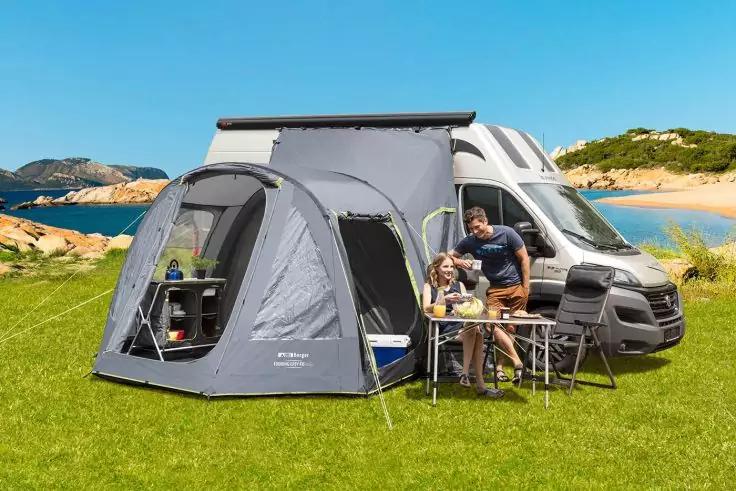
Would you like more living space on the campsite? Then you can extend your camper van with an awning. Since an awning also protects against rain and wind, it can be used across several seasons.
Inflatable awnings are particularly practical for panel vans. Thanks to air chambers, they are quick and easy to set up. They are also easier to transport than awnings with steel poles.
Here you can find inflatable awnings in the Berger online shop.
In this article, you can learn more about awnings for camper vans.
Use storage space flexibly
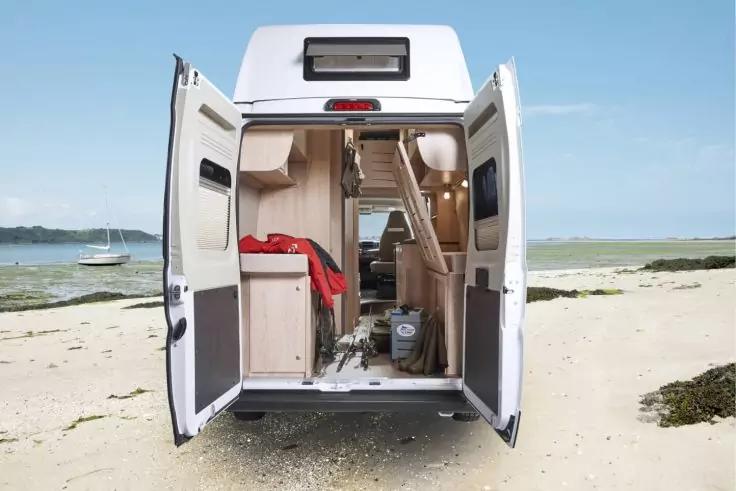
Many travellers carry a lot of luggage. The largest storage space in a panel van is usually under the rear bed. In some models, such as the Pössl 2win Vario, the slatted base can be folded up and fixed in a near-vertical position. This creates enough space inside for taller items. However, if you want to sleep, you need to remove the load first, which is not always practical during short stops.
Consider the size of the refrigerator
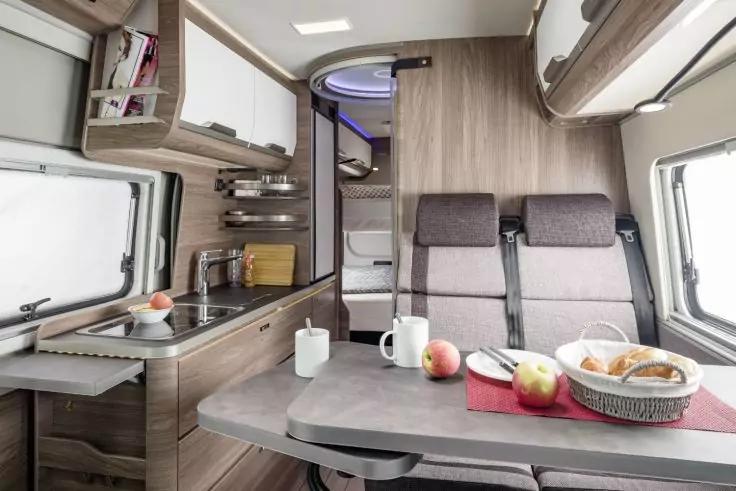
The more people travel with you, the more food you will need. Therefore, a family camper should offer sufficient fridge capacity. Due to limited space, this is not always easy. A large 150-litre fridge often stands freely, while a compact 60-litre fridge fits under the worktop.
High-roof panel vans offer more flexibility. In these models, a larger fridge can be integrated into or placed above the kitchen unit, as seen in the Knaus Boxlife 630.
If your van only has a small fridge, you can store additional food in a cool box. Models with up to 30 litres are ideal and can be placed between the front seats. Larger cool boxes (40 litres or more) can be stored under the rear bed.
Here you can find cool boxes in the Berger online shop.
Don’t compromise on engine power

Most camper vans and panel vans are available with different engine options. Depending on the model, engines typically range between 120 and 180 hp.
Keep in mind: if you travel with several people and plenty of luggage, higher engine power is beneficial – especially when driving through mountainous regions like the Alps. So don’t cut corners when choosing the engine.
Consider payload
Finally, pay attention to the maximum payload of your van. Many camper vans are designed for a standard weight of 3.3 tonnes. For an additional cost, this can often be increased to 3.5 tonnes. With three or four travellers, an extra 200 kg of payload can make a significant difference.
Conclusion: everything under one roof
A family holiday in a panel van? Absolutely possible! Spending time in a compact space can even strengthen relationships – provided everyone follows some basic rules and keeps luggage to a minimum. The key factors when choosing a van are the number of seats and sleeping places. From there, you can narrow down your options based on layout and storage space. And don’t forget: a tent or awning can significantly expand your living space.
