

How to reproof your tent in a few simple steps
Step-by-step guide
A reliable tent should prevent water from penetrating the fabric. Over time, the water-repellent coating can wear off, especially on older tents. In this guide, you’ll learn how to restore the coating and what to consider during application.
Table of contents
Renew water repellency regularly
Over time, every fabric loses its water-repellent layer. It is worn away by heavy rain, mechanical friction during transport or by fine dust particles carried by the wind that hit the surface. UV rays from the sun also accelerate the ageing process of the material. You can recognize this when the colours fade and the fabric eventually becomes brittle and cracked.
If the water-repellent layer is missing, the material is no longer protected against environmental influences. When you go camping, the fabric can no longer repel rainwater properly, allowing moisture, wind and dirt to penetrate through fine cracks in the surface. To prevent this, you should regularly treat your tent or awning with a waterproofing agent.
Water-repellent does not mean waterproof
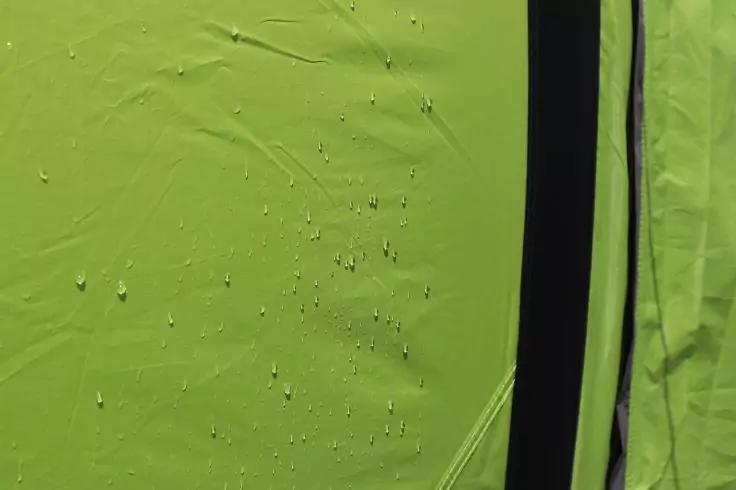
One thing first: Waterproofing your (awning) tent makes it water-repellent and prevents it from absorbing water. However, this does not mean that the fabric becomes completely waterproof. True waterproofing, meaning complete impermeability, is only achieved through seam sealing or special coatings.





When should a tent be waterproofed?
You can easily test whether the material needs to be treated again. Set up the tent in your garden and spray it with a garden hose. Alternatively, use a watering can to pour water over the fabric. If the water beads up and rolls off in small droplets, the waterproofing is still sufficient. However, if a continuous water film forms and the fabric absorbs water, it is time to reapply the treatment. Waterproofing should generally be renewed every two to three years.
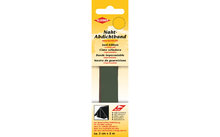
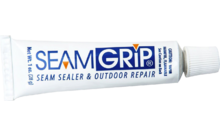
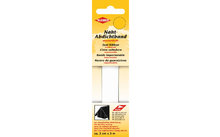
Since tent seams are particularly prone to water penetration, you can also check from the inside whether they are still sealed during this test. If water seeps through, you should reseal the seams as well. Practical seam sealants are available for this purpose.
What products can be used to waterproof a tent?
To treat your tent, you can choose between waterproofing sprays or liquid agents in the form of emulsions.





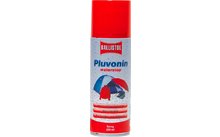

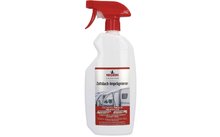

The advantage of sprays is that the coating can be applied quickly and easily. Emulsions, on the other hand, allow for a more even application using a brush or sponge, although they require a bit more effort. Some emulsions can even be used to soak the entire fabric, for example in a tub.
It is important to always check the manufacturer's instructions beforehand. These will tell you which products are suitable. You should also consider the approximate size of your tent, as this determines how much product you will need.
- Tents made of synthetic materials (polyester): Waterproofing sprays are ideal, as they penetrate well into the fine pores of the fabric.
- Tents made of cotton or cotton blends: Water-based liquid agents are recommended, as they preserve the breathability of the material.
Step-by-step guide: How to waterproof your tent
1. Read the manufacturer's instructions for your tent or awning to determine which waterproofing agents are suitable. Also check the instructions on the product itself, as each one has specific requirements. Some must be applied to damp fabric, while others require a dry surface. Once you have selected the right product, you can get started.
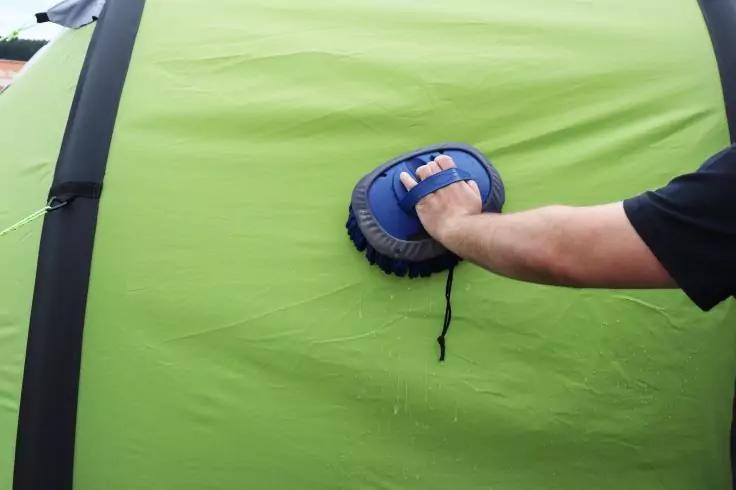
2. Set up your tent and check it for damage. Remove coarse dirt with a soft brush. Then clean it with water and, if necessary, a mild soap-based cleaner such as washing-up liquid. Avoid aggressive cleaning agents, as they may damage the fabric. Let the tent dry afterwards.
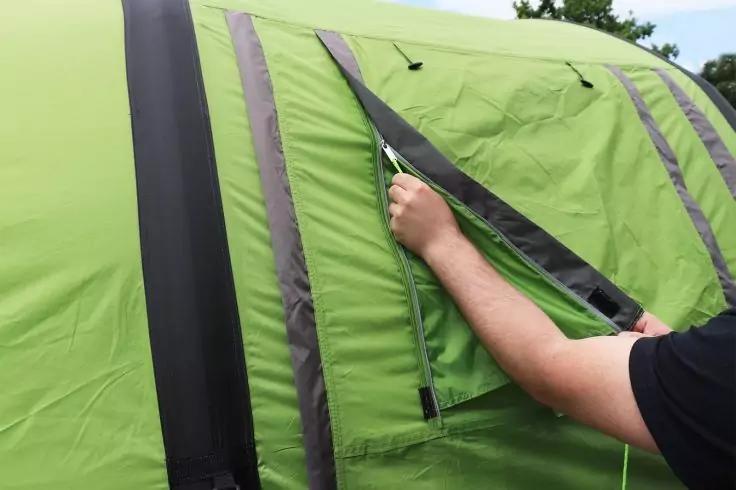
3. Close all zips, pockets and buttons, including window flaps.
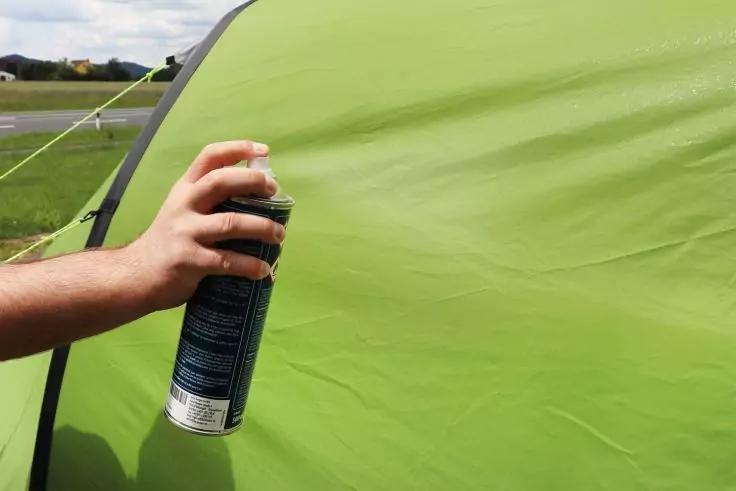
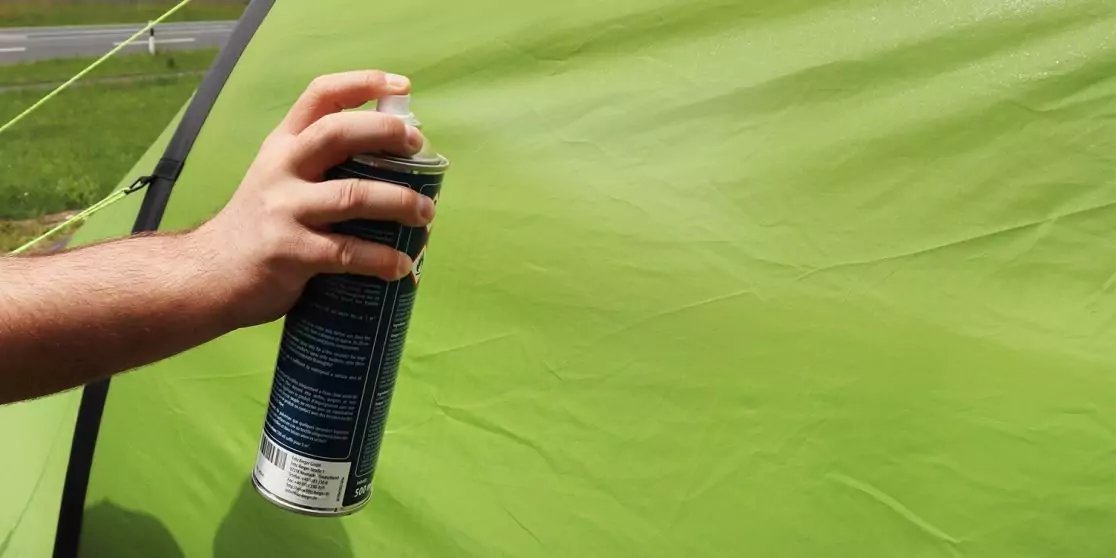
If you use a liquid agent: Dilute it with water as instructed and pour it into a bowl or spray bottle. Apply it evenly using a sponge, microfibre cloth or soft brush. In this example, we use a spray.
If you use a spray: Apply it evenly from the recommended distance. Always work outdoors and avoid inhaling the spray. Do not rush, as this can lead to uneven coverage and insufficient sealing. The more carefully you work, the better the result.
Protect your skin, eyes and respiratory system by wearing gloves and appropriate protective equipment.
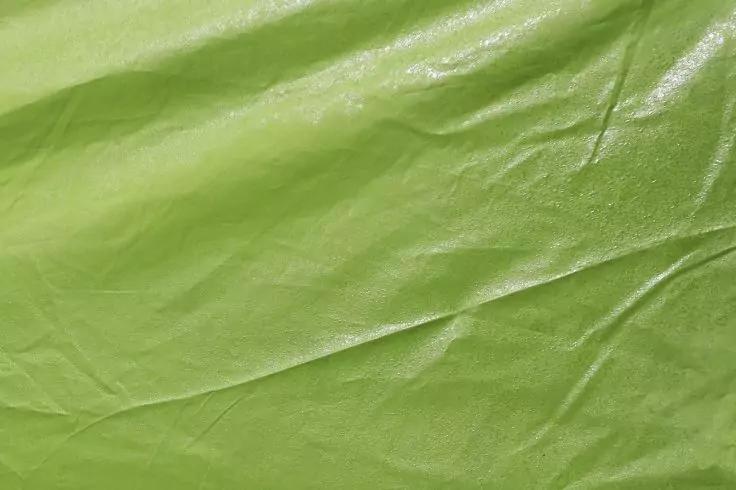
4. Allow the product to take effect and dry. Depending on the material and product used, this may take several hours.
For optimal results, always follow the recommended drying time.
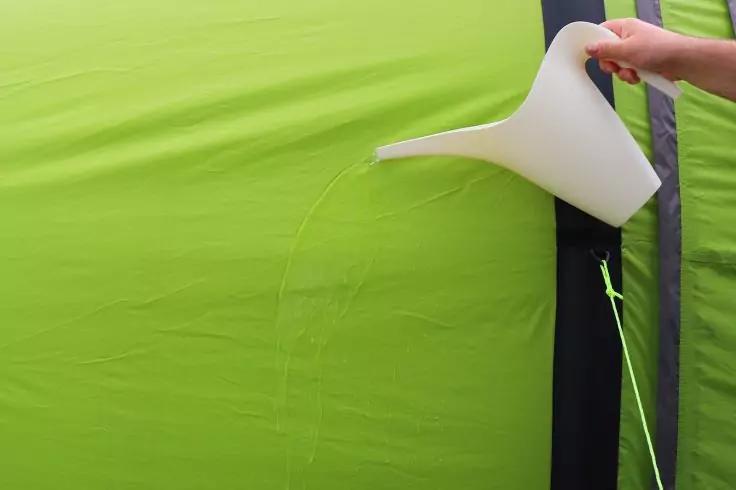
5. Once dry, test the waterproofing with a garden hose or watering can. Check carefully for leaks, including hidden areas and zips. If necessary, repeat the process after the tent has dried again.
Conclusion: Improve water repellency with minimal effort
Properly waterproofing your tent requires little effort and no specialist knowledge. It helps protect against dirt and rain penetration while extending the lifespan of your tent.