
Sustainability Strategies of Textile Manufacturers
A way through the jungle of sustainability labels
With sustainable clothing, you can enjoy carefree time in nature. But how sustainably was the clothing really produced? Here you will get an overview of the sustainability strategies of different textile manufacturers.
Table of contents
Sustainability labels
To help you find your way through the jungle of labels, I will show you some important sustainability labels that can make your purchasing decision easier.
PFC Free
PFCs, i.e. per- and polyfluorinated chemicals, are mainly used in the textile industry because they have excellent water- and dirt-repellent properties. However, these substances are harmful to the environment and to health, and some of them do not degrade at all. Researchers have found traces of PFCs in drinking water, in the air and in the breast milk of some mammals.
For a long time, there was no alternative to PFCs for waterproofing clothing. It was only after Greenpeace launched the “Detox our clothes” campaign in 2012 that the industry began to develop new alternatives. To ensure water- and dirt-repellent properties, companies now use a harmless and environmentally friendly DWR (Durable Water Repellency) treatment that is completely free from PFCs.
Sustainable materials
Organic Cotton
Organic cotton is grown without the use of toxic pesticides and synthetic fertilisers.
S.Café
This fabric, which creates fibres from recycled coffee grounds, was developed by Schöffel.
Recycled polyester
Recycled polyester is used to reduce dependence on oil and to create less air, water and soil pollution. It mainly consists of recycled polyester fibres and PET bottles, which are needed for many materials such as fleece, synthetic fibre fillings and softshell fabrics.
Read more about RPET in this blog post.
Bluesign
The Bluesign system stands for all-round sustainable textile production and is a comprehensive concept that covers the entire textile production chain, from chemical manufacturers and material selection to various process steps such as dyeing and printing. Among other things, the focus is on the following points:
- careful use of resources
- the lowest possible impact on people and the environment
- fixed limits for chemical substances
- high standards of workplace safety

Green Button
A state seal of approval from the German Federal Government for sustainable textiles. Products with this seal, introduced in 2019, must be manufactured to high environmental and social standards in compliance with government-defined criteria. The Green Button checks, on the one hand, how companies fulfil their duty of care and, on the other hand, how products are manufactured with regard to the use of chemicals, environmental impact and production conditions.
Independent testing bodies monitor compliance with and fulfilment of all 46 standards and criteria.
Fair Wear Foundation
The FWF is an organisation whose goal is to improve working conditions in the textile and garment industry. It is mainly active in developing countries in Southeast Asia. Companies that are part of the FWF guarantee that subcontractors are subject to the same fair working conditions as the main suppliers. In addition to compliance with important social labour standards, this also includes paying workers a living wage.
Responsible Down Standard
The voluntary industry standard RDS stands for animal welfare in the sourcing of down. It ensures that the down used is only a by-product of the meat industry and was therefore not taken from live animals. All major manufacturers of outdoor products use 100 percent RDS-certified down in all their down products.
How do textile manufacturers approach sustainability?
To give you a better overview of how sustainable textile manufacturers are, I have listed five well-known brands for you here.
Schöffel
Sustainability, social responsibility and high-quality products form the core of the Schöffel philosophy. High quality and the associated durability are the most effective way to protect the environment. Schöffel reflects the idea: “Everything we do today, or fail to do, will come back to us at some point.”
Schöffel is pursuing climate neutrality for the entire company, including the supply chain, by 2025. The main goal is to reduce the CO2 emissions of all products by 50 percent by 2030. As a basis for this, a CO2 footprint is drawn up regularly, breaking down the total emissions. Schöffel is already climate-neutral at its Schwabmünchen site.
In addition to its internal efforts, the company also fulfils its duty of transparency towards customers and offers support so that clothing can be worn for as long as possible: the Schöffel Service Factory repairs, reproofs and alters garments, thereby extending their service life.
Schöffel has been a committed member of the Fair Wear Foundation since 2011. In the annual FWF audit, it was confirmed that 99 percent of the production volume is now sourced from appropriately controlled production facilities.
In addition to soft cellulose fibre, which is biodegradable, Schöffel also uses its own specially developed S.Café® fabric for textiles, which is made from recycled coffee grounds. All Schöffel collections are PFC-free.
Here you can find all Schöffel products in the Berger online shop.
Jack Wolfskin
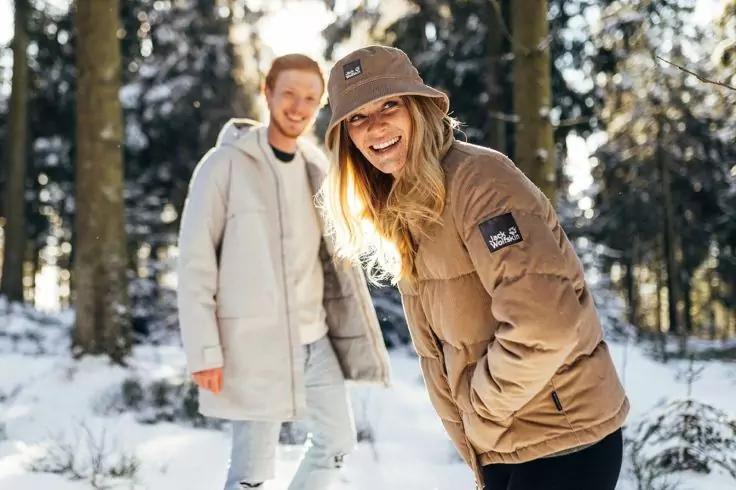
At Jack Wolfskin, “At home outdoors” not only means enjoying the natural world, but also doing everything possible to preserve and protect it. That is why sustainability has been an integral part of the company’s strategy since it was founded in Frankfurt in 1981. It has priority in all areas of the business, from product development to the supply chain and advocacy. Jack Wolfskin sees itself as having a responsibility to promote sustainable shopping and works continuously to improve the quality and durability of its products. In addition, the company wants to share knowledge about protecting nature with its customers.
Jack Wolfskin has already taken the following steps in its material selection:
- exclusively certified organic cotton: since 2013, Jack Wolfskin has used 100 percent organic cotton from certified organic sources for all cotton products and cotton-blend fabrics
- certified according to the Global Recycled Standard (GRS): applies to all recycled components
- animal welfare: Jack Wolfskin only uses down and feathers for clothing that are independently certified. The company also pays very close attention to the origin of the merino wool used. Leather must not come from protected species.
- completely PFC-free: the clothing range, as well as all backpacks and bags, is completely PFC-free.
In addition, the electricity supply in almost all stores in Germany and Austria has been switched to green electricity.
Here you can find all Jack Wolfskin products in the Berger online shop.
Fjällräven
Fjällräven produces in harmony with nature, develops durable clothing and equipment, and imposes the strictest standards on itself and its suppliers.

Wherever possible, the company uses organic, recyclable and recycled materials or gives preference to traceable and natural materials. But if, for example, a sustainable fabric for a rain jacket is not waterproof, it cannot be used. For this reason, materials and fibres are divided into the following categories:
- excellent: such as recycled wool or organic cotton
- good: such as recycled polyester and traceable wool
- okay: such as polyamide, cotton and metal buttons
- no: such as PVC, PFC-containing fabrics and angora wool
Fjällräven’s chemical management policy helps avoid hazardous and prohibited chemicals. Naturally, the products are carefully tested in the laboratory to ensure all criteria are met.
As early as 2012, the company decided to convert its entire product range to PFC-free impregnation.
The Sustainable Brand Index is Europe’s largest sustainability study. 58,000 consumers from eight countries work together to evaluate more than 1,400 brands from 35 industries. Since 2011, this framework has been used every year to assess how sustainable brands are perceived by stakeholders. In the 2021 evaluation, Fjällräven was voted Sweden’s most sustainable brand in the category “Clothes & Fashion – Brand” for the second year in a row.
Here you can find all Fjällräven products in the Berger online shop.
Vaude
Hardly any German outdoor company has won more sustainability awards than Vaude. This is also because environmentally and socially responsible business practices have formed the basis of the company’s strategy for many years.
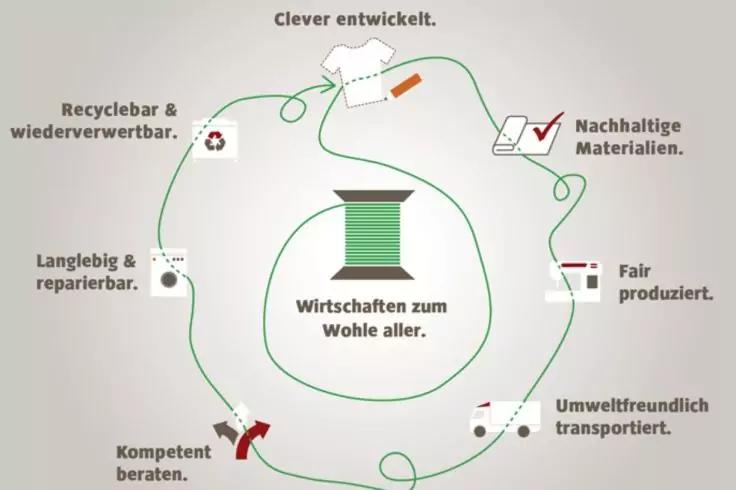
Vaude already pays attention to environmentally friendly materials, long durability and repairability when designing its products. In doing so, the company takes responsibility for employees and trading partners worldwide, for the environment and for future generations.
“We want to be a thoroughly sustainable company. Every year, we get a little closer to this vision.” Antje von Dewitz, Managing Director of Vaude.
Vaude’s mission is to create innovative products, solutions and services that are environmentally friendly and fair. Through sustainable quality and circular systems, the company minimises its ecological footprint and respects planetary boundaries.
For Vaude’s Green Shape products, only certified, environmentally friendly materials and printing processes are used in order to create a functional product made from sustainable materials. In addition, Vaude voluntarily commits itself to avoiding controversial technologies and materials and to ensuring the greatest possible traceability of all materials back to their origin.
Here you can find all Vaude products in the Berger online shop.
Columbia
Columbia is committed to respecting and preserving natural resources. The goal is to limit the impact on communities while at the same time protecting nature. Columbia employs an entire team dedicated to assessing the environmental impact of production. The effects of the production chain in terms of energy, waste, water and chemicals are measured, tracked and improved. The company achieves this, among other things, through
- efficient and responsible shipping and packaging methods, and
- effective resource management in logistics and operations.
Columbia is also socially committed and gives each employee 16 paid volunteer hours per year, which can be used for voluntary activities.
Here you can find all Columbia clothing items in the Berger online shop.
Conclusion: dressing sustainably is not difficult
Sustainability can be incorporated into many areas of life. As more and more textile manufacturers are turning to sustainably produced clothing, it has long ceased to be a problem in your wardrobe too.