
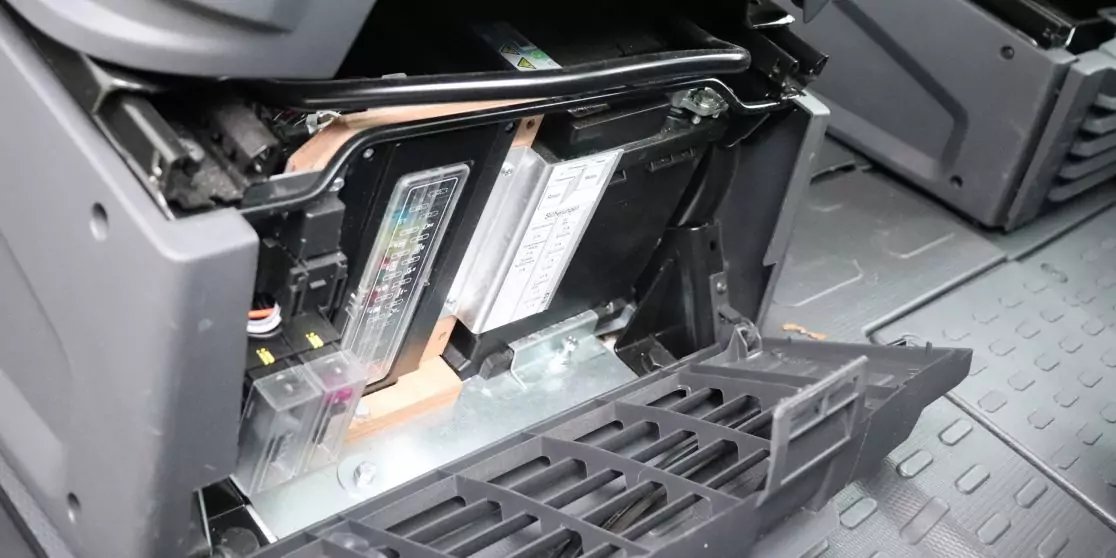


Which vehicle battery is right for your motorhome?
An overview of the different battery technologies
If you are camping away from electricity and still want to use the fridge or TV, the vehicle battery is responsible for the power supply. We show you which types there are and which vehicle battery is suitable for which situation.
Table of contents
- What is an on-board battery?
- Why do I need an on-board battery at all?
- Key performance feature of on-board batteries: The number of charging cycles
- There are four types of on-board batteries
- Correct charging keeps your battery alive for longer
- Increasing the performance of your battery
- Conclusion: price and use are decisive
What is an on-board battery?
An on-board battery is there to supply your electronic devices in the motorhome with energy independently of shore power and over a longer period of time. The on-board battery is constantly recharged via a permanently connected charger and stores the electricity like a rechargeable battery.
Depending on the battery type, on-board batteries can be discharged by up to 90 percent.
Why do I need an on-board battery at all?
The starter battery is responsible for the power supply in the base vehicle and receives its power via your vehicle’s alternator. It supplies the engine with power for starting and powers the brake light, navigation system and ventilation. Starter batteries are unsuitable for the on-board power supply because they are not designed for cyclical charging and discharging.
Key performance feature of on-board batteries:
The number of charging cycles
The service life of an on-board battery depends, among other things, on how many charging cycles it can withstand. A charging cycle describes the complete charging of the battery by 100 percent, but is defined differently depending on the manufacturer.
The specified number of cycles for on-board batteries tells you how many charging cycles a battery can withstand without its storage capacity being reduced. This property is also known as cycle stability.
A powerful battery is characterised by a high depth of cycle, which means that it can be discharged particularly deeply without causing any significant negative effects.
There are four types of on-board batteries
- Wet batteries
- Gel batteries
- AGM batteries
- Lithium batteries
Click here for the battery range in the Berger online shop.
Wet batteries
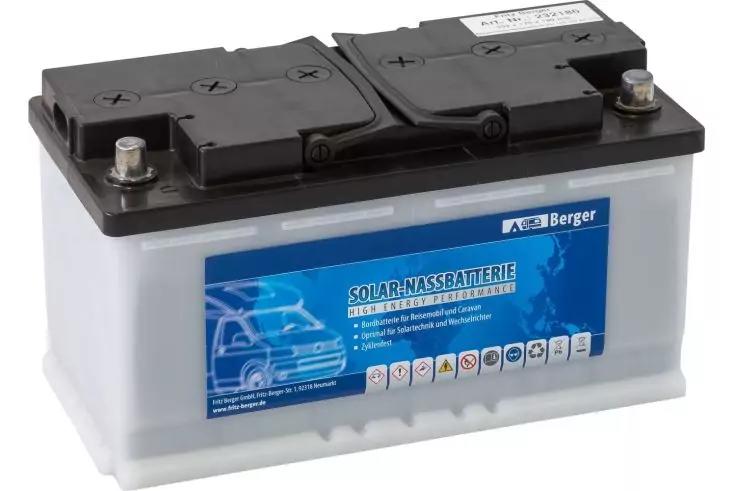
A wet battery, also known as a lead-acid battery, consists of an acid-water mixture with lead electrodes.
A wet battery has a simple design and offers inexpensive charging technology.
It is suitable for campers,
- … who use shore power and stay overnight on pitches or campsites.
- … who only camp self-sufficiently for short periods.
- … who quickly recharge their on-board battery.
- … with a motorhome with low-power consumers.
You can find more information about wet batteries in this blog post.
Gel batteries
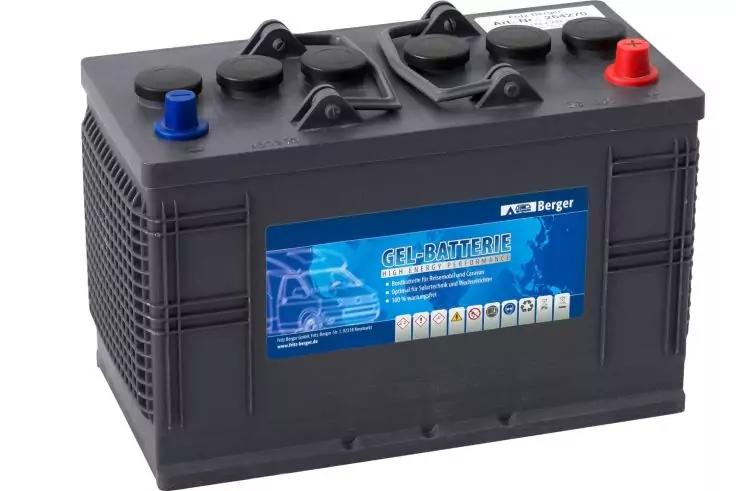
Gel batteries are the further development of wet batteries and have a similar structure, except that the electrodes are bound in gel and the lead plates are thicker.
They are suitable for campers,
- … who need a powerful battery.
- … who often camp off-grid for longer periods and do not want to be dependent on the power grid.
- … who preferably travel to warm regions.
- … who only use a few low-power electrical appliances when camping self-sufficiently.
- … who do not want any maintenance work.
You can find more information about gel batteries in this blog post.
AGM batteries
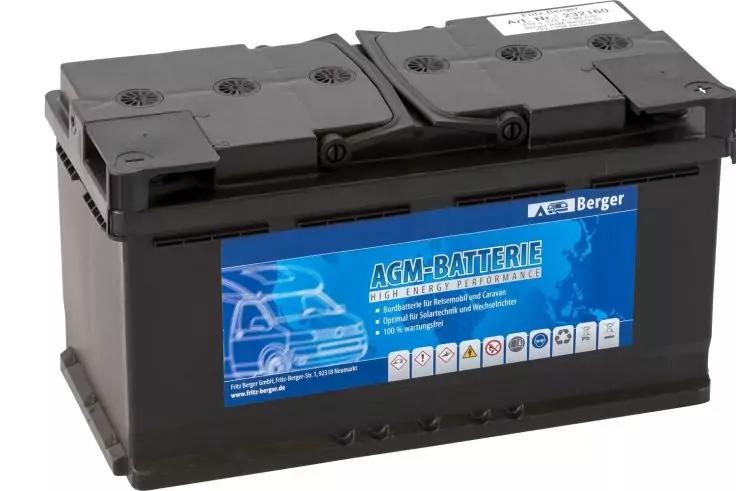
AGM batteries, meaning Absorbent Glass Mat batteries, combine the advantages of wet and gel batteries.
They are not flooded, but consist of a glass fibre mat saturated with sulphuric acid.
They are suitable for campers,
- … who are looking for a battery with plenty of power.
- … who also travel in winter.
- … who use many electrical appliances with high consumption, including via an inverter.
- ... with a solar system on their motorhome roof.
- … who want their battery to charge quickly.
You can find more information about AGM batteries in this blog post.
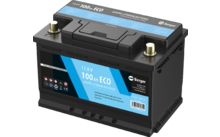
Lithium batteries
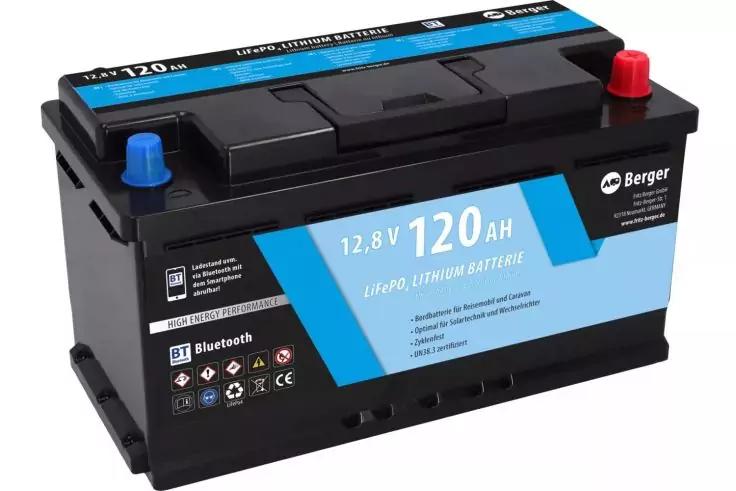
We know lithium batteries from our smartphones. In leisure vehicles, this modern technology is used in the form of LiFePO4 rechargeable batteries.
Unlike the previous batteries, this battery technology has its own electronics, the BMS, or battery management system, which controls itself.
They are suitable for campers,
- … who are looking for an optimal energy storage solution.
- … who use an air conditioner and/or an inverter with high-power consumers.
- … who have high power consumption.
- ... who travel very often and also like to be self-sufficient.
- … who rely on the most modern technology.
You can find more information about lithium batteries in this blog post.
Here you can find an overview of lithium batteries

Correct charging keeps your battery alive for longer
The following also depends on the battery type: a battery lasts longer if you rarely discharge it completely. If you often camp self-sufficiently for a longer period and use up the full battery capacity, you will sooner or later have to expect reduced battery performance. If you do not use your vehicle for a longer period of time, it makes sense for your battery to charge it to 100 percent at regular intervals.
Before storing your motorhome, we recommend removing your battery from the vehicle when fully charged and storing it at slightly above-freezing temperatures.
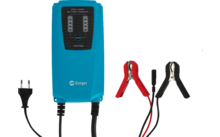
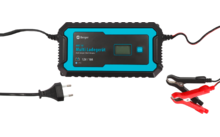
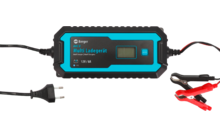
If you want to upgrade your battery, you must always check compatibility with the charger, as an AGM battery cannot be operated with a charger designed for wet batteries. However, there are also multi-purpose devices with corresponding settings for several battery types.
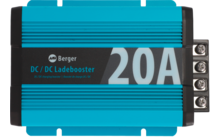
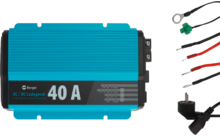
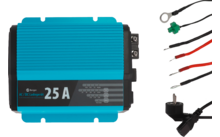
Another thing that has a positive effect on the service life of your on-board battery is a charging booster. Its main task is to charge the on-board battery without voltage fluctuations or power losses, which can particularly affect vehicles with the Euro 6 standard. In a motorhome, for example, it is connected between the starter and on-board battery. There it stabilises the charging voltage to the on-board battery, which has a positive effect on its service life.
Click here for the Berger charging booster, which is compatible with different battery types.
Here you can find a selection of different chargers
Increasing the performance of your battery
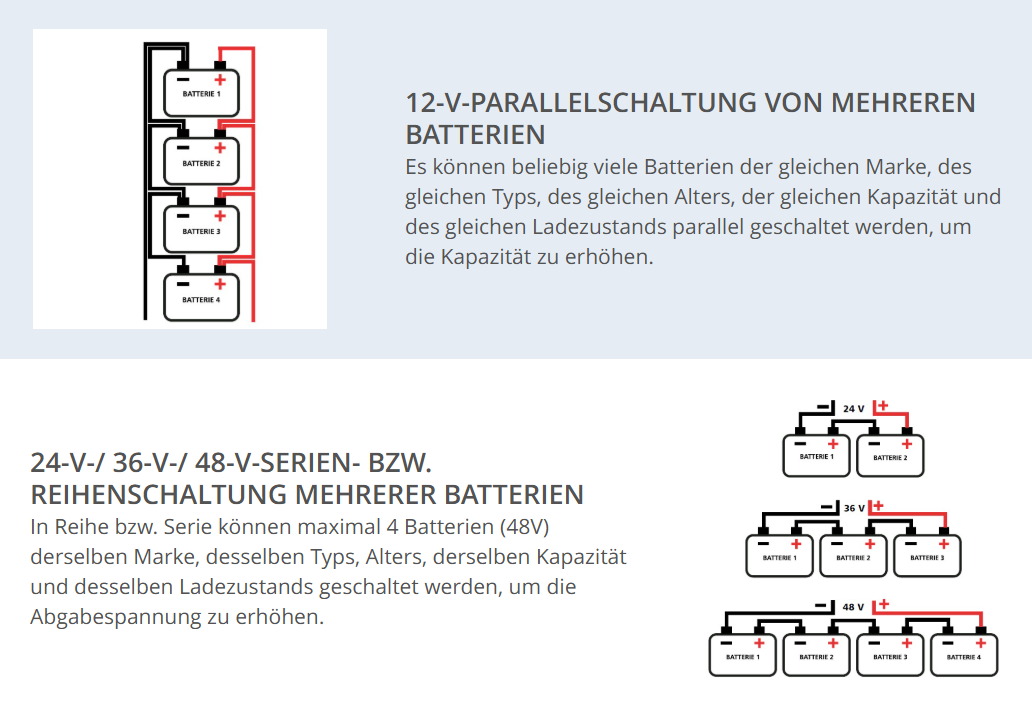
Depending on whether you need a higher capacity or a higher voltage, you have the option of connecting batteries in parallel or in series.
Only batteries of identical design may be connected together.
Conclusion: price and use are decisive
It becomes clear that every battery technology has certain advantages and disadvantages, which come into play depending on your requirements and usage behaviour. In general, there is no such thing as „the” perfect on-board battery. Even if you have to dig a little deeper into your pocket here, in our opinion the lithium battery is the best choice – especially in the long term. After all, it requires the least maintenance, is the least sensitive and has a long service life.